How to Clean Baseboard Heaters: A Complete DIY Guide

How to Clean Baseboard Heaters: A Complete DIY Guide
Baseboard heaters are the workhorses of many homes, quietly keeping spaces warm through long winters. But like anything else in your home, they accumulate dust, pet hair, and debris over time. When that gunk builds up on the heating fins, your heater has to work harder to push warm air into the room which means higher energy bills and a less comfortable home. The burning dust smell when you first fire up the system each year? That's your incentive right there.
Cleaning baseboard heaters isn't complicated, but it does require knowing whether you have an electric or hot-water system and taking the right safety precautions. This guide covers everything you need to know to get your baseboards running efficiently again.
Understanding Your Baseboard Heater Type
Before you grab a vacuum, you need to identify what kind of baseboard heater you have. The cleaning process differs slightly between electric and hydronic (hot water) systems, and so do the safety requirements.
Electric baseboard heaters run on dedicated circuits and have heating elements inside metal fins. They're controlled by wall thermostats, sometimes line-voltage thermostats that sit directly on the heater unit. These get very hot during operation and present an electrical hazard if not properly shut off before cleaning.
Hot water baseboard heaters also called hydronic or radiant baseboard are connected to a boiler system that circulates heated water through the fins. These are typically cooler to the touch than electric models and don't present the same electrical risk, but you still need to turn down the thermostat and let the system cool before cleaning.
Key Differences in Cleaning Approach
Both types accumulate dust on their fins, but electric heaters tend to collect more debris because they run constantly during cold months, creating constant air circulation that pulls in dust. Hot water systems may develop mineral deposits or sludge inside the fins if the system isn't bled of air regularly, which is a different maintenance issue entirely.
According to HVAC professionals, the fins in baseboards can accumulate dust, dander, and other particulates during the seasons when they are not in use, leading to a burning smell when the heater is first turned on and reduced heating efficiency. Tiger Inspect Services, 2023
For this guide, we'll focus on the dust cleaning process that applies to both types, with notes on where the approach diverges.
Why Cleaning Baseboard Heaters Matters
You might be wondering whether this task is really necessary. The short answer is yes and here's why it matters beyond just aesthetics.
Dust and dirt on baseboard heaters can prevent the warm air from circulating properly, meaning they have to work harder and use more energy to maintain the same temperature. BC Hydro notes that this inefficiency directly impacts your utility bills, since a clogged heater has to run longer and more frequently to achieve the same level of warmth.
There's also a safety dimension. Excessive dust buildup on electric heating elements can create a burning smell when the heater runs, and in extreme cases, it poses a fire risk. While serious incidents are rare, the smell of burning dust is unsettling and indicates your heater is working under compromised conditions.
Beyond efficiency and safety, regular cleaning extends the lifespan of your heating equipment. When fins are clogged with debris, the heating element runs hotter to compensate, which stresses the components over time.
What You'll Need
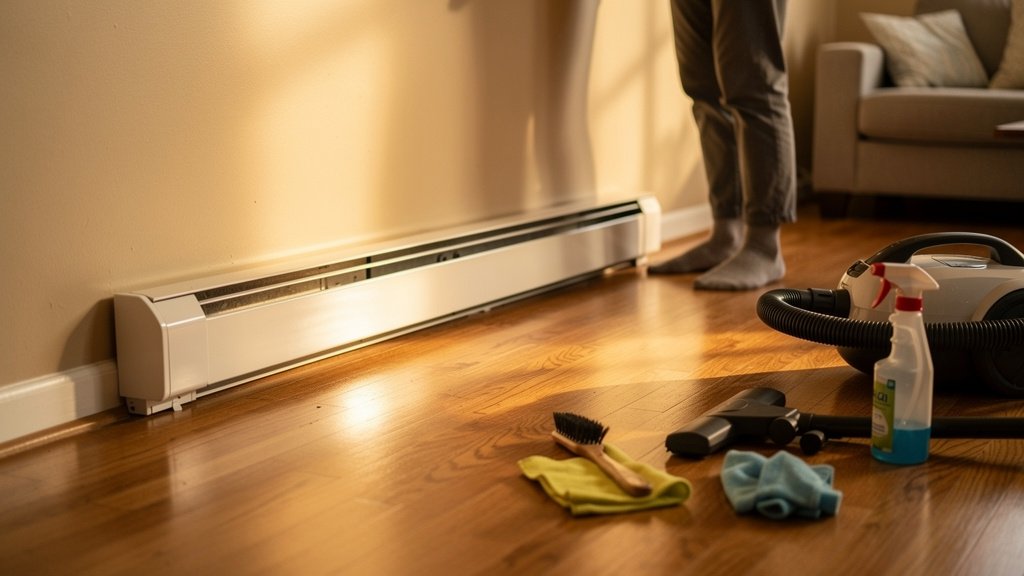
Gather these supplies before you start most are probably already in your home:
- Vacuum with brush attachment (a shop vac works best for the fins)
- Hair dryer or canned air (for blowing out stubborn dust)
- Soft brush (an old toothbrush or baseboard cleaning brush)
- Microfiber cloths
- Mild dish soap and warm water
- Safety glasses
- Flathead screwdriver or putty knife (for snap-off covers)
Safety glasses are non-negotiable you'll be dislodging dust that will fall downward, and you don't want it in your eyes.
Step-by-Step: How to Clean Baseboard Heaters
Follow this process carefully, especially the safety steps at the beginning.
- Turn off the heater and let it cool. For electric baseboards, switch off the breaker at the circuit panel. For hot water systems, lower the thermostat and wait 30-60 minutes for the fins to cool. Never clean a warm heater you risk burns and, with electric models, electrical shock.
- Remove the heater cover. Most baseboard covers snap onto brackets. Lift the bottom edge gently with a flathead screwdriver or putty knife, then tilt the panel forward and lift it off the top hook. If your covers are screwed on, remove the screws first. Set the cover aside carefully they can be bulky.
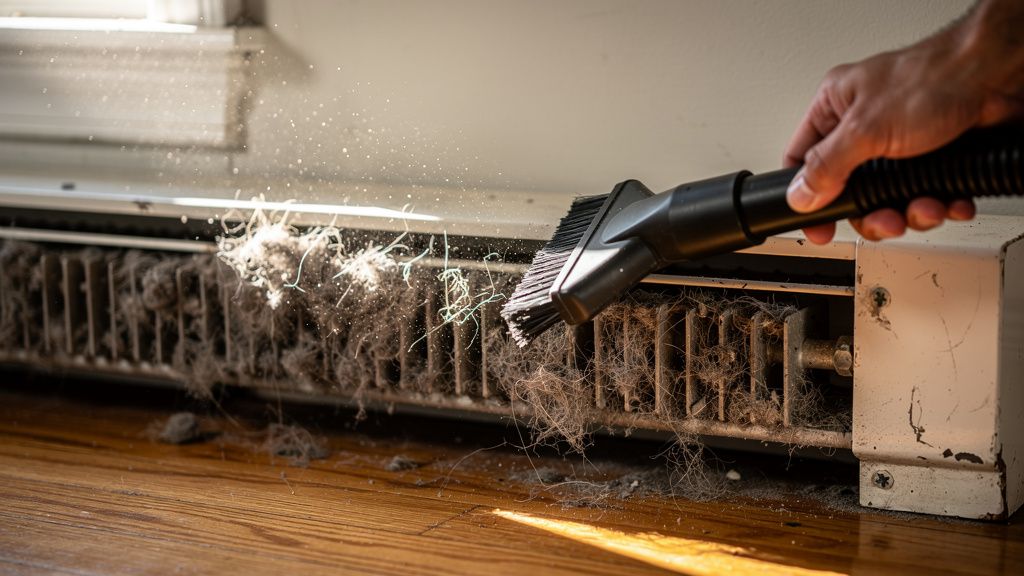
- Vacuum the fins thoroughly. Use the brush attachment on your vacuum to suck dust from between the fins. Work from top to bottom, vacuuming all sides of the fin assembly. If the vacuum won't reach between tight fins, use a hair dryer on cool setting to blow the dust out while vacuuming it up with the other hand.
- Dislodge stubborn debris with a soft brush. An old toothbrush or soft-bristled cleaning brush works well to loosen compacted dust and pet hair from between the fins. Be gentle the fins are thin metal and bend easily. Bent fins reduce heating efficiency.
- Clean behind the heater. Use the vacuum hose attachment to pull dust and debris from behind and beneath the unit. This area is often overlooked but accumulates significant debris that blocks airflow.
- Wipe down the cover. Remove the front cover and clean it separately with a microfiber cloth dampened with mild soapy water. Rinse with a clean, damp cloth and let it dry completely before reattaching.
- Replace the cover and restore power. Snap the cover back onto its brackets or reattach the screws. Turn the thermostat back up or flip the breaker back on.
The entire process takes 30-45 minutes per heater, depending on how dirty it is. If you have multiple baseboards, budget accordingly.
How Often Should You Clean Baseboard Heaters?
Most manufacturers and HVAC professionals recommend cleaning baseboard heaters at least once a year ideally in late summer or early fall, right before the heating system gets turned on for the first time. That timing gives you a clean start to the heating season without the initial burning dust smell.
According to Cadet Heat, electric baseboard heaters should be cleaned at least once every two years to ensure proper performance. However, if you have pets that shed, live in a dusty area, or notice reduced heating efficiency, twice-yearly cleaning is warranted.
E-Cloth recommends cleaning behind baseboard heaters twice a year for most households, or quarterly if your home is particularly dusty. The area behind and beneath the heater collects debris that restricts airflow even when the fins themselves look clean.
Electric vs. Hot Water Baseboard Heaters: A Comparison
Understanding the differences between these two common types helps you clean them properly and safely.
Common Mistakes to Avoid
Even well-intentioned homeowners make mistakes that can damage their heaters or reduce cleaning effectiveness. Here's what not to do:
Cleaning while the heater is warm or on. This is the most dangerous mistake. Electric heaters should always have the breaker turned off, not just the thermostat. Some thermostats remain powered even when the heater is "off."
Using abrasive cleaners or scrubbers. Steel wool, abrasive sponges, and harsh chemicals can damage the finish on heater fins and covers. Stick to mild soap and soft cloths.
Bending the fins. Those thin metal fins are designed to maximize surface area for heat transfer. Bending them reduces efficiency significantly. Use a soft brush, not a rigid tool.
Skipping the area behind the heater. Dust accumulates behind and beneath baseboards just as readily as on the fins themselves, and buildup in that space restricts both cold air intake and warm air output.
Using too much water on electric models. While a damp cloth is fine for wiping covers, avoid getting excessive moisture near the heating elements or electrical connections of electric baseboards.
Tips for Deep Cleaning Stubborn Buildup
If your baseboards haven't been cleaned in years, you might encounter compacted debris that vacuuming alone won't shift. Here's how to handle tough situations:
For lint and pet hair woven into the fins, a paint stir stick wrapped in a microfiber cloth works as a makeshift brush. Slide it between the fins to loosen the debris, then vacuum up what remains.
When compressed dust has formed a hard crust, lightly mist the area with water from a spray bottle just enough to dampen it then wait a few minutes before vacuuming. The moisture loosens the dust without creating a mess.
For hot water systems with mineral buildup inside the fins, that's a different problem requiring a professional plumber to flush the system. Cleaning the external fins helps, but internal sludge requires system maintenance.
Consider using compressed air cans for electronics cleaning they blow dust out of tight spaces that vacuums can't reach. Use this in a well-ventilated area and have the vacuum running to catch the debris.
When to Call a Professional
While routine cleaning is a DIY task, some situations warrant professional help. If your baseboard heater makes unusual noises, doesn't heat evenly, or shows signs of electrical problems (buzzing, flickering, burning smells that persist after cleaning), call an HVAC technician.
For hot water systems, if you notice rust, leaks, or inconsistent heating after cleaning the exterior, the issue likely lies in the boiler or piping not something you should troubleshoot yourself.
Hiring a professional makes practical sense if you have multiple baseboards throughout a large home. What takes a homeowner an entire weekend might take a pro a couple of hours with commercial-grade equipment.
FAQs
Can I clean baseboard heaters without removing the cover?
You can vacuum the exposed top surface and wipe the front cover without removing it, but you won't reach the fins where most dust accumulates. Removing the cover takes two minutes and makes the job much more effective. Most covers snap off easily with a putty knife.
Why does my baseboard heater smell like burning dust when I first turn it on?
This is normal and happens because dust has settled on the heating elements during the summer or off-season. When the heater warms up for the first time, the dust burns off. Regular cleaning before each heating season eliminates or significantly reduces this smell.
Will cleaning my baseboard heaters lower my energy bills?
Yes, potentially. When fins are clogged with dust, the heater has to run longer to achieve the same room temperature because airflow is restricted. Clean heaters operate more efficiently, though the exact savings depend on your system, local energy costs, and how dirty the heaters were.
Can I use a pressure washer on baseboard heater covers?
Absolutely not. Pressure washers are too powerful and will damage the fins, warp the cover material, and force water into electrical components (on electric models). Use a damp cloth with mild soap instead.
How do I clean baseboard heaters if I can't remove the cover?
Some older or specialty covers are permanently attached. In these cases, use a vacuum with a narrow crevice tool to clean the top and front surfaces as much as possible. You can also use compressed air to blow dust out through the vents, then vacuum it up from the floor.
Is it safe to clean electric baseboard heaters myself?
Yes, as long as you turn off the correct breaker. Don't just turn down the thermostat line-voltage electric baseboards can remain energized even when the thermostat is off. Go to your electrical panel and turn off the breaker dedicated to the baseboard circuit.
What to Remember About Baseboard Heater Cleaning
- Clean baseboard heaters at least once a year, ideally before heating season begins.
- Always turn off electric baseboards at the breaker before cleaning; let hot water systems cool with the thermostat lowered.
- Remove the cover to access the fins most snap off with a putty knife.
- Use a vacuum with brush attachment and soft brush to avoid bending fins.
- Don't forget to clean behind and beneath the heater, where significant dust accumulates.
- Pet owners and those in dusty environments should clean baseboards twice yearly or more frequently.
- Regular cleaning improves efficiency, reduces energy bills, extends heater lifespan, and eliminates burning dust odors.